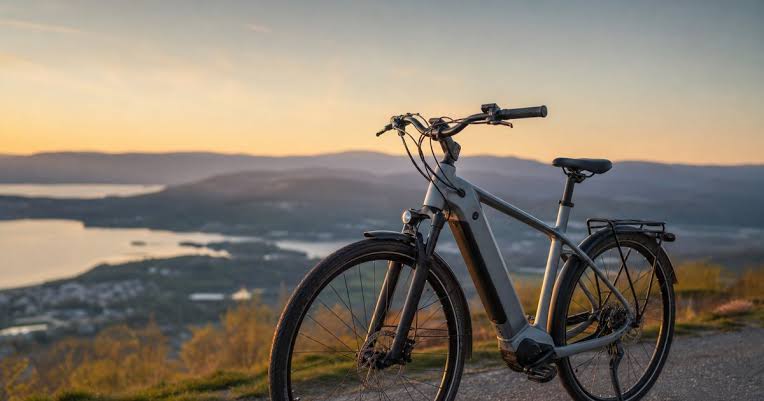
An electric cycle can save time for getting around, shopping, and almost any other ride you want. One specification will likely determine your purchase decision: battery range. The manufacturer provides a maximum range on a single charge, but the actual range you get in real life is likely different.
Range is not just a function of battery capacity. It also depends on rider weight, terrain, riding style, temperature, tyre pressure, and battery condition. All affect energy consumption. Knowing this helps buyers assess manufacturer claims and choose an e-cycle suitable for their usual rides.
The advertised range is generally an estimate under specified test conditions. These vary by manufacturer but typically include rider weight, terrain, assist level, speed, and pedalling effort.
Real world riding is less predictable. A commuter's journey likely involves traffic lights, hills, rough roads, frequent stops and starts, and various weather conditions. All these affect energy consumption and reduce the distance possible on a single charge.
When looking at electric cycles, go beyond the maximum range figure. Check the battery capacity (in Wh) and see if the manufacturer explains how the range is calculated. A bigger battery holds more energy, but the distance also depends on motor efficiency and how much assistance you use.
Rather than take the advertised figure as gospel, treat it as a guide and assess if the cycle can handle your normal route.
The combined rider, cycle, and load weight affects the energy needed to move. More weight requires more energy, especially when accelerating, climbing, or starting repeatedly in traffic.
Carrying a heavy rucksack or shopping bags increases energy consumption compared to riding without extra luggage. The effect depends on the route, speed, motor, and riding conditions.
Before buying an e-cycle, check its maximum permitted load (rider plus luggage). If you regularly carry a laptop bag or groceries, include those when estimating your expected range.
Your route affects battery performance. Flat roads use less energy than hills. Rough roads increase energy use due to rolling resistance. Frequent stops and starts use more energy than maintaining a steady pace.
The level of motor assistance is another key factor.
These modes vary by model, so check the manufacturer's description. Riding smoothly, anticipating traffic, and using lower assistance levels when possible helps conserve energy. However, a low setting isn't always best on hilly routes or those needing more assistance.
Tyre pressure is often overlooked but affects rolling resistance. Underinflated tyres require more energy to roll, reducing range. Check the recommended pressure on the tyre or in the manual and adjust to the manufacturer's guidelines.
Temperature also affects battery performance. Li-ion batteries deliver less usable energy in the cold, and excessive heat accelerates battery aging. The effect varies with battery design, temperature, and how the cycle is stored or used.
For daily reliability, avoid leaving your battery in extreme heat or cold for long periods. Follow the manufacturer's charging and storage instructions, especially in very hot or cold weather.
A battery's performance will degrade as its AA battery's performance degrades with age. Charge cycles, storage conditions, usage, and exposure to high temperatures all reduce capacity over time. As a result, an older battery will not have the same range as when new.n ask about the age of the battery, its usage history, maintenance and warranty. Find out if the manufacturer or dealer can assess the health of the battery. A battery which charges fully is not necessarily a battery which has the same capacity as when it was new.
For a new electric cycle, check out the battery warranty and the availability of battery replacement. That's important as the state of the battery will have an impact on both range and the overall cost of ownership over time.
The best range estimate is one that's relevant to your actual routine. Work out the total distance you travel (including the return journey and any regular detours). Then add in the hills, any extra loads, the number of stops you make and the level of assistance you'd expect to be using.
As a practical approach to planning, go for a comfortable margin rather than the maximum range that's advertised. If your typical round trip is 20km then you're going to want a bike with a real world range that comfortably exceeds that. The margin you need will be down to your route and your access to charging.
In the initial few weeks just track the distance you've done, the battery level used and the conditions on each ride. That will go a long way to giving you a more realistic figure for your own electric cycle. If your commute is tough and you have limited opportunity to charge then you'll want to prioritise a model with sufficient capacity to cope on less than ideal days.
It's an estimate based on specific conditions, not a guarantee. The actual range will vary depending on rider weight, terrain, level of assistance, temperature, tyre pressure and battery condition.
A bigger battery will hold more energy, but range is also very much a function of motor efficiency, the cycle design, the riding conditions and how much assistance you're using.
Eco mode will often help to extend your range as it uses less motor assistance. The actual outcome will of course vary depending on the cycle and how much effort you're putting in.
Yes, underinflated tyres will increase rolling resistance and thus mean the motor has to use more energy. Keeping the tyres at the correct pressure will help with efficiency.
Yes, battery capacity can degrade with age, with usage and with unsuitable storage conditions. You can do all sorts of things to help it, but you can't stop it all.
There's no such thing as a universal buffer as routes and riding conditions will vary. You need to pick a cycle whose realistic range is comfortably in excess of your round trip distance (allowing for hills, weather, luggage and the odd detour).
The advertised range of an e-cycle is of course a useful benchmark, but in reality it will vary dramatically depending on how you use it. Rider weight, terrain, level of assistance, tyre pressure, temperature and battery condition all have an effect. Take all of that into account when you're looking at an e-cycle and you'll be in a much better position to select one that will actually meet your needs for day to day travel. A bit of careful comparison of the specs and a sensible amount of buffer in your charging will go a long way to ensuring you get the right cycle for your requirements.
An Indo-American News website. It covers Gossips, Politics, Movies, Technolgy, and Sports News and Photo Galleries and Live Coverage of Events via Youtube. The website is established in 2015 and is owned by AGK FIRE INC.
This website uses cookies.


